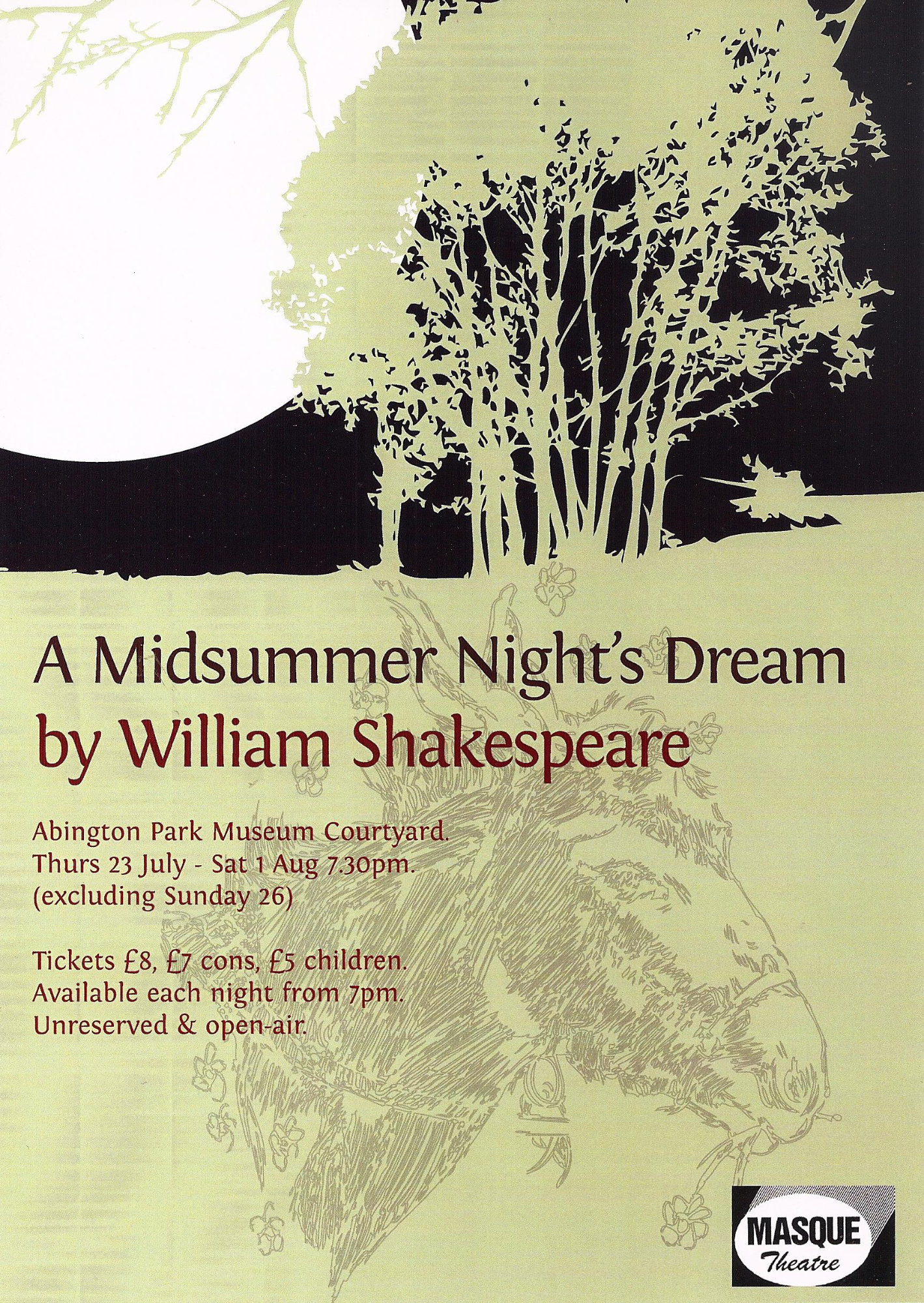
A MIDSUMMER NIGHT'S DREAM
by William Shakespeare
by William Shakespeare
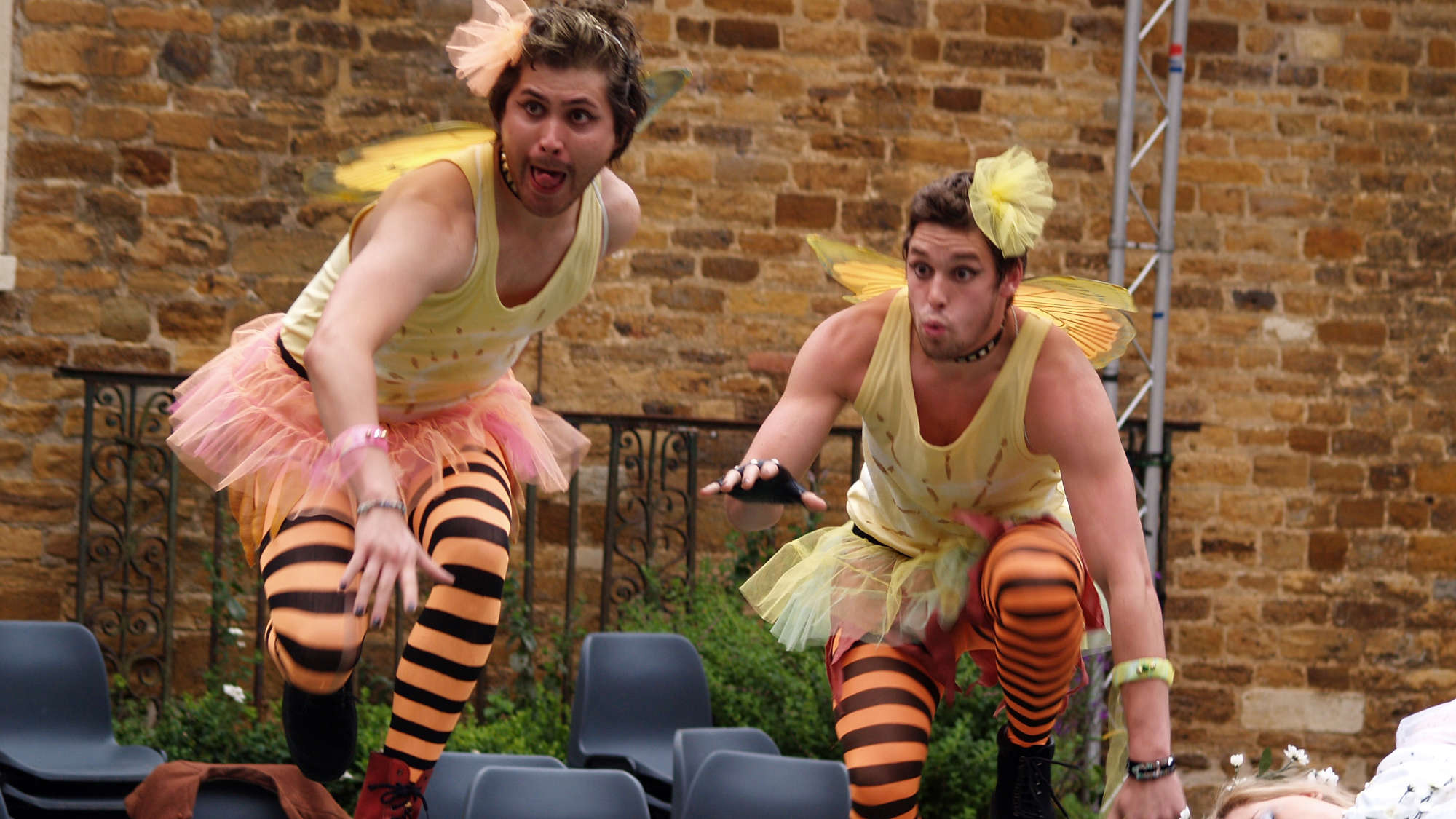
The fairies. Photo by Elizabeth Gibbons
Thu 23 July - Sat 1 August 2009 at 7.30pm (no performance on Sunday)
Performed in the open air in the courtyard of Abington Park Museum, Northampton
CAST & CREW
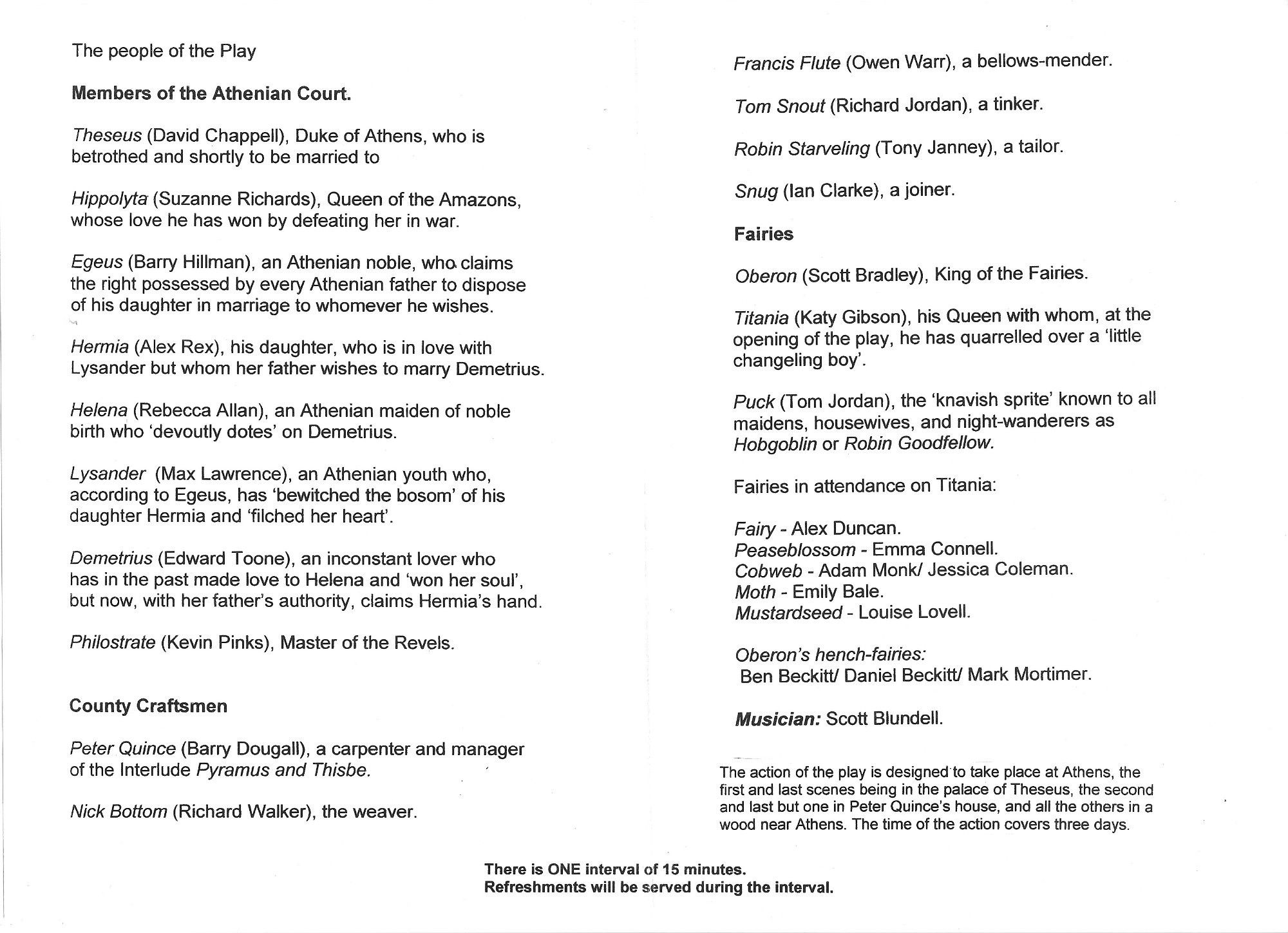
Theseus David Chappell
Hippolyta Suzanne Richards
Egeus Barry Hillman
Hermia Alex Rex
Helena Rebecca Allan
Lysander Max Lawrence
Demetrius Edward Toone
Philostrate Kevin Pinks
Peter Quince Barry Dougall
Nick Bottom Richard Walker
Francis Flute Owen Warr
Tom Snout Richard Jordan
Robin Starveling Tony Janney
Snug Ian Clarke
Oberon Scott Bradley
Titania Katy Gibson
Puck Tom Jordan
Fairy Alex Duncan
Peaseblossom Emma Connell
Cobweb Adam Monk, Jessica Cleman
Moth Emily Bale
Mustardseed Louise Lovell
Oberon’s hench-fairies Ben Beckitt, Daniel Beckitt, Mark Mortimer
Musician Scott Blundell
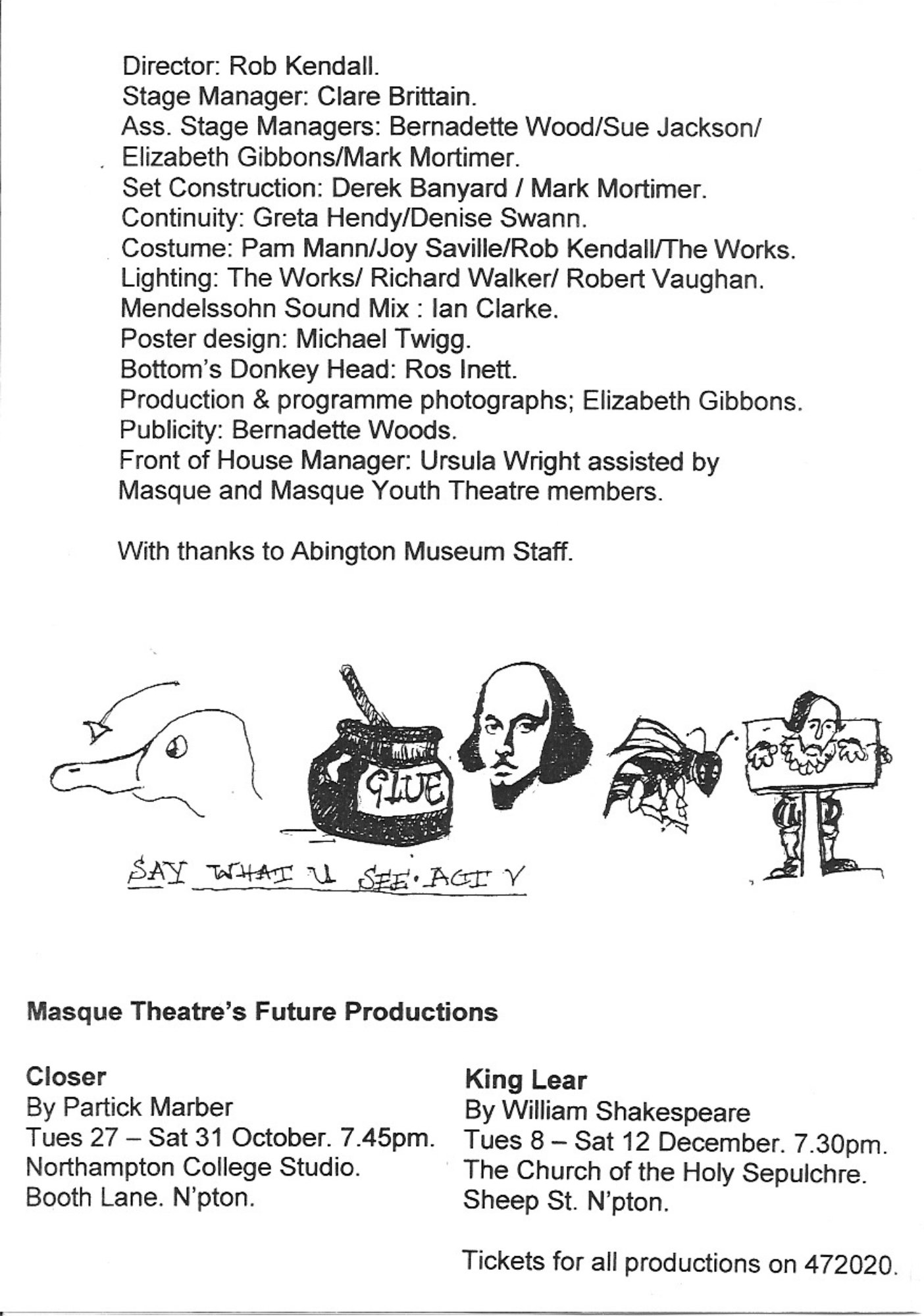
Director Rob Kendall
Stage Manager Clare Brittain
Assistant Stage Managers Bernadette Wood, Sue Jackson, Elizabeth Gibbons, Mark Mortimer
Set Construction Derek Banyard, Mark Mortimer
Continuity Greta Hendy, Denise Swann
Costume Pam Mann, Joy Saville, Rob Kendall, The Works
Lighting The Works, Richard Walker, Robert Vaughan
Mendelssohn Sound Mix Ian Clarke
Poster Design Michael Twigg
Donkey Head Ros Inett
Production and programme photos Elizabeth Gibbons
Publicity Bernadette Wood
Front of House Manager Ursula Wright
assisted by Masque and Masque Youth Theatre members
Photo gallery

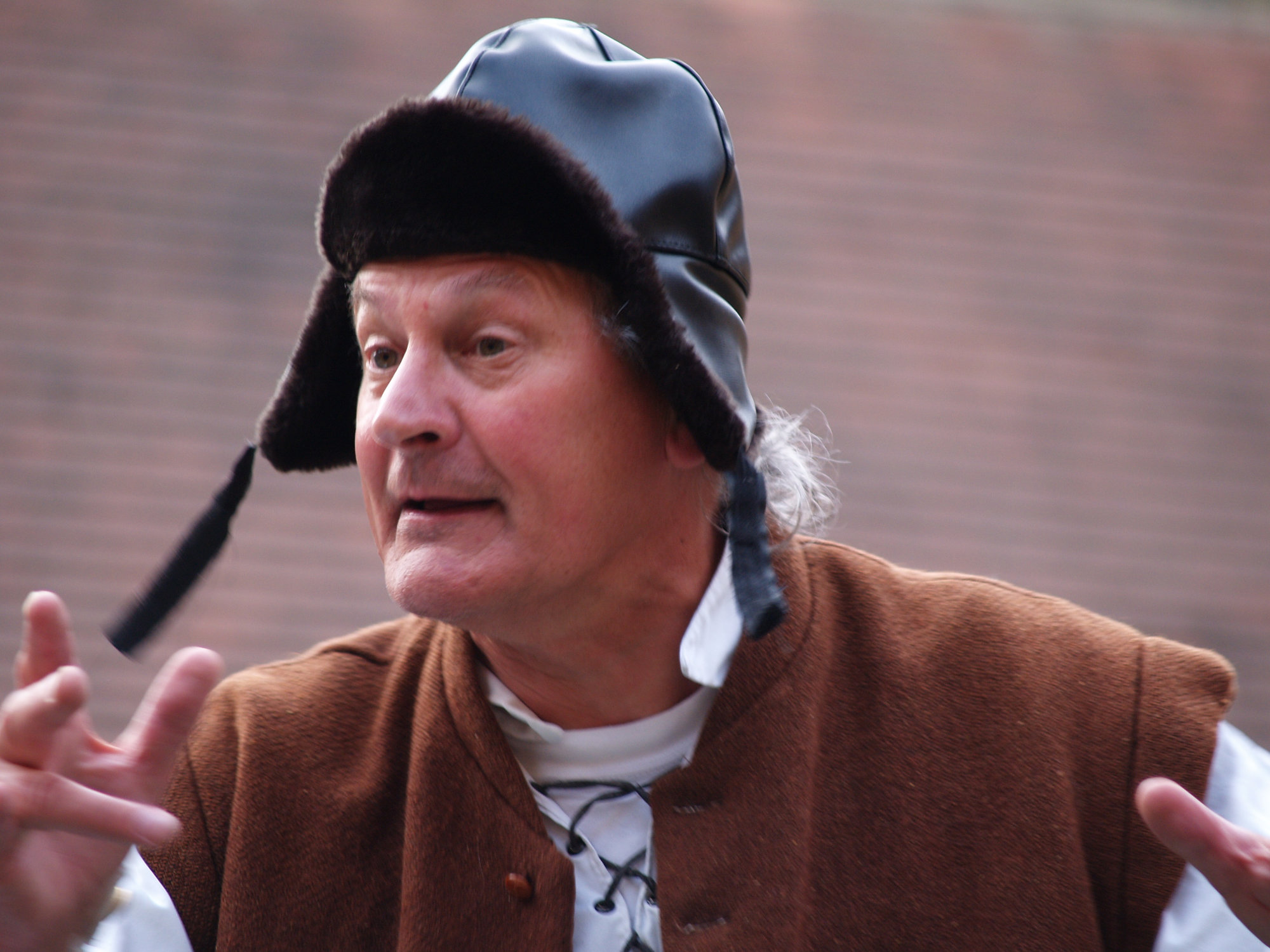
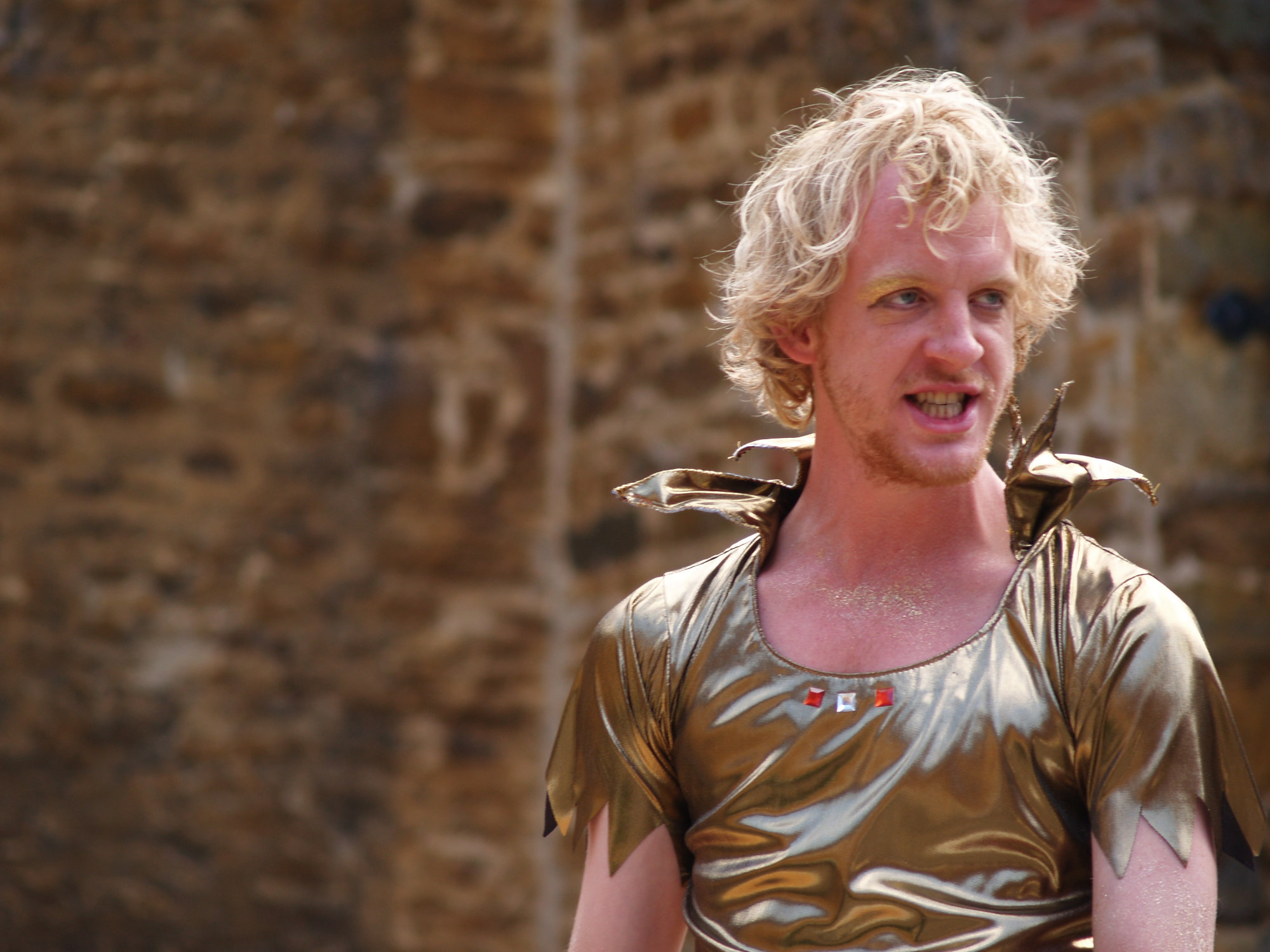
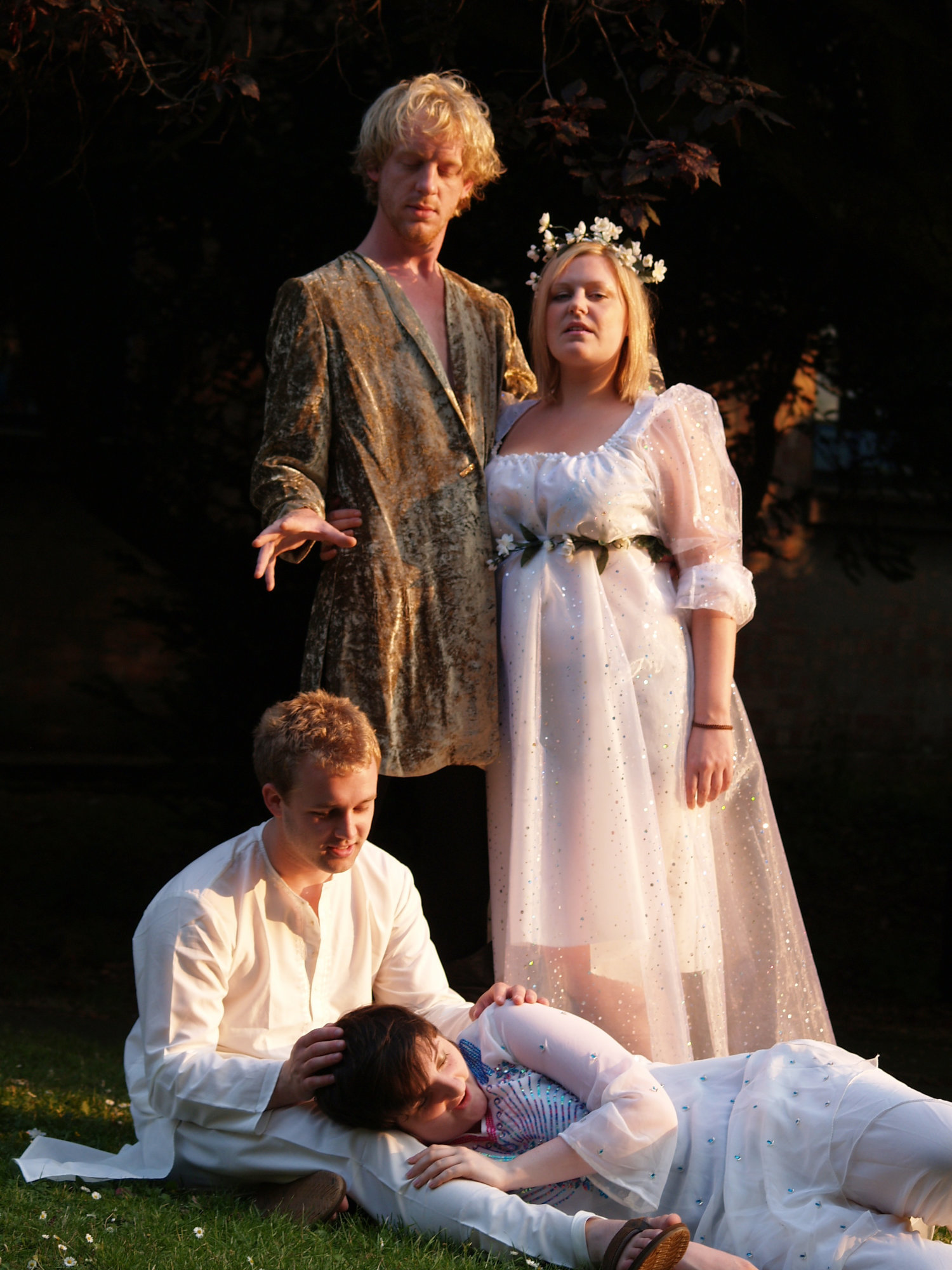
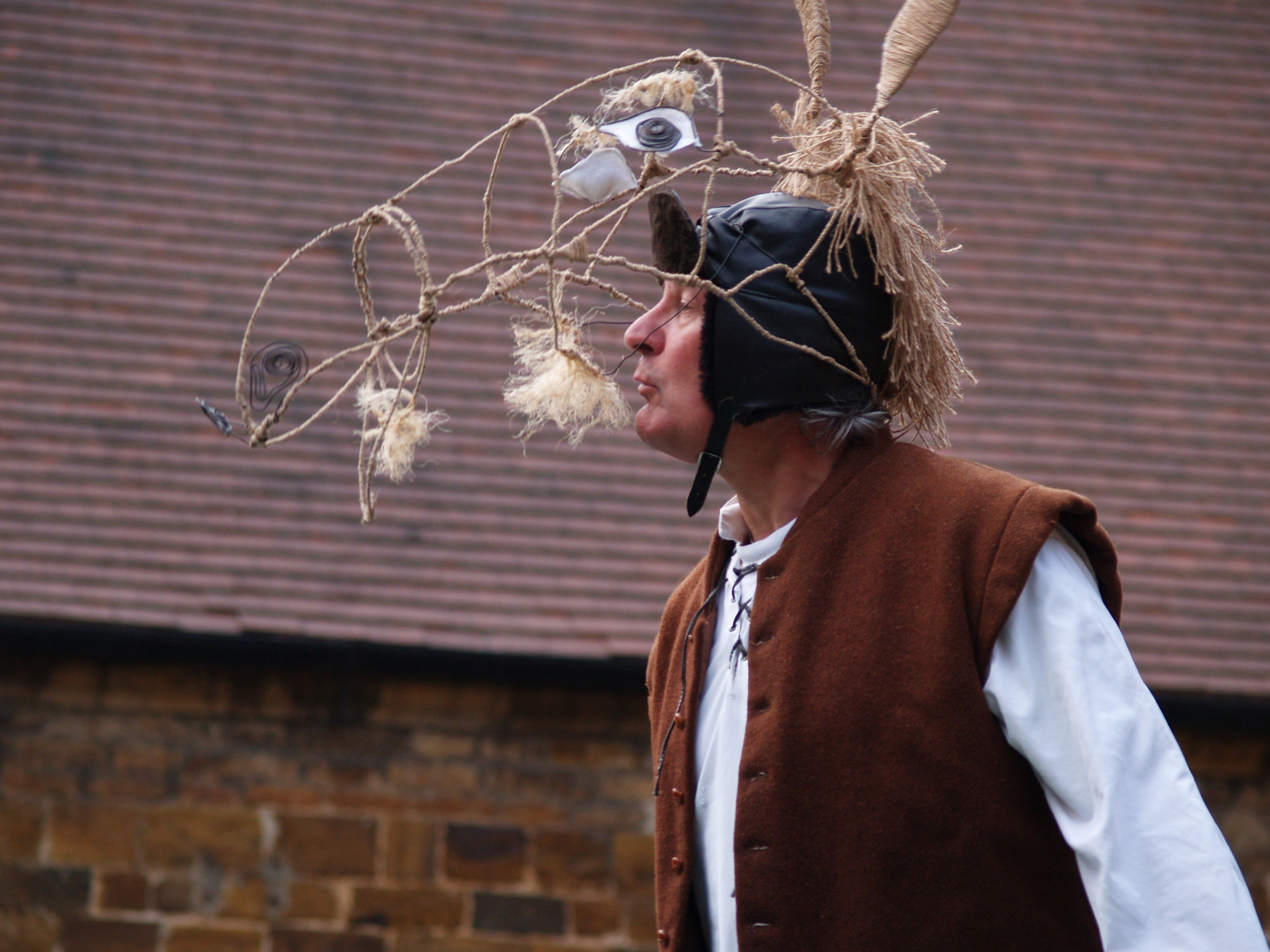

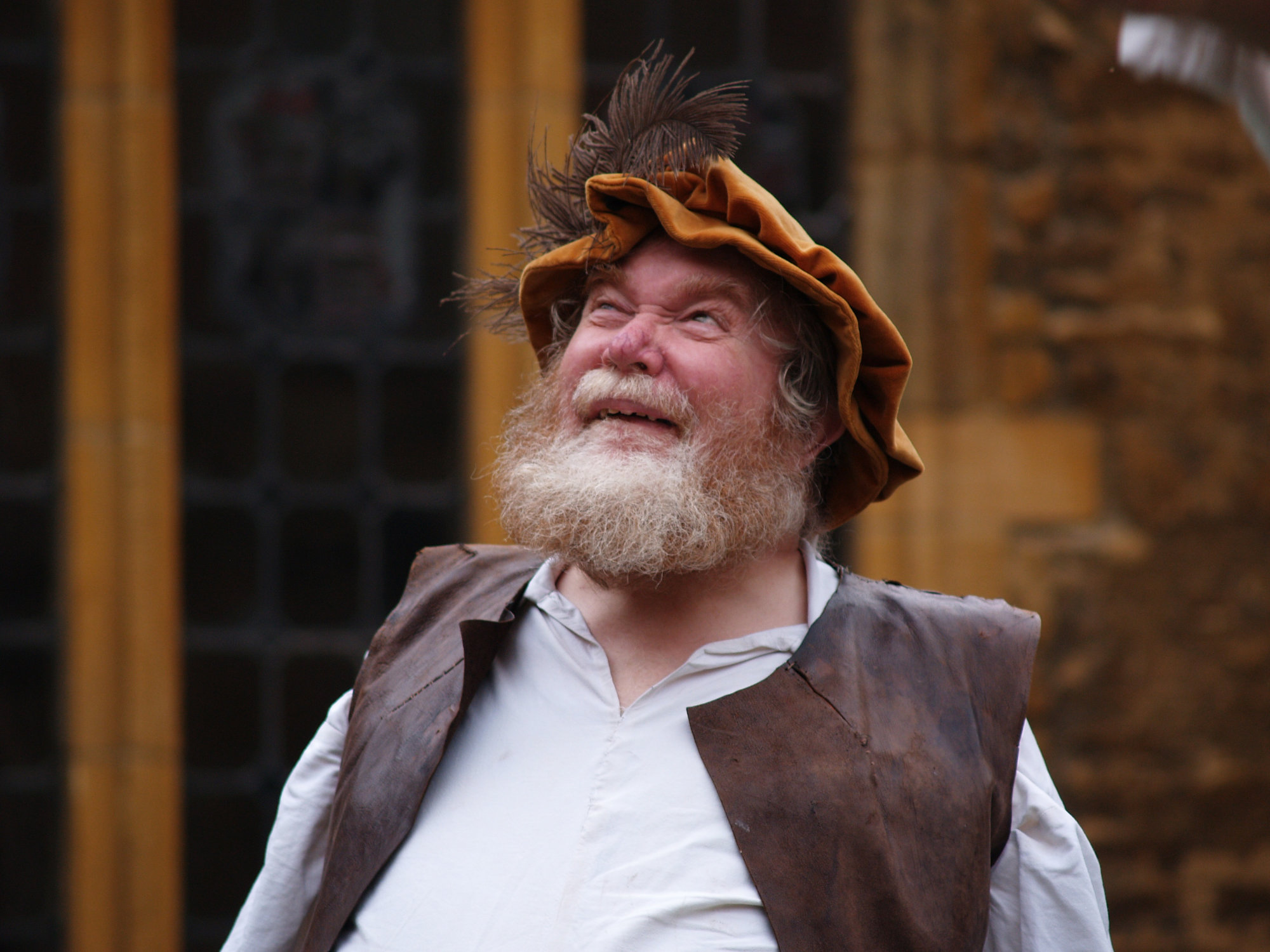
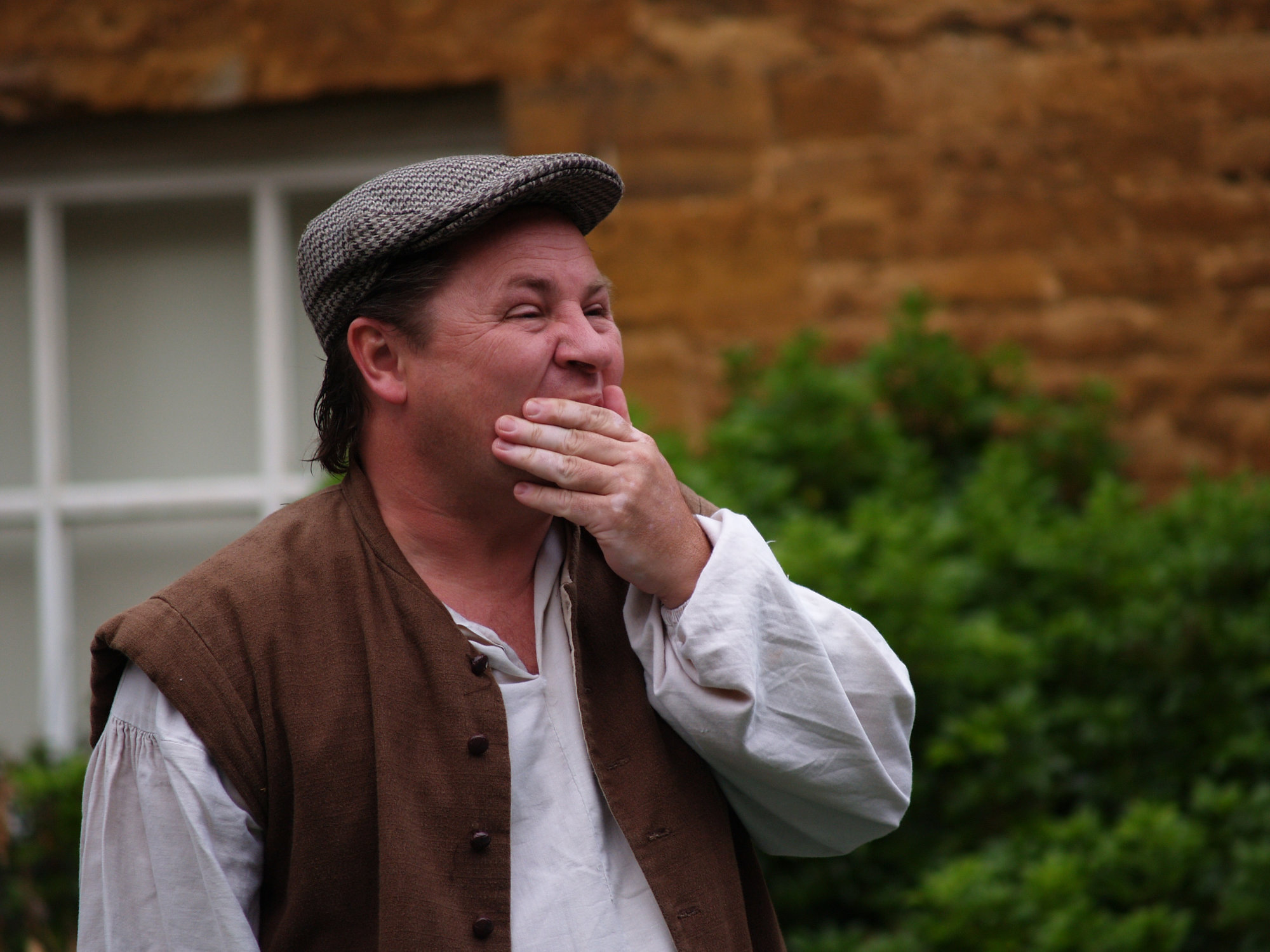
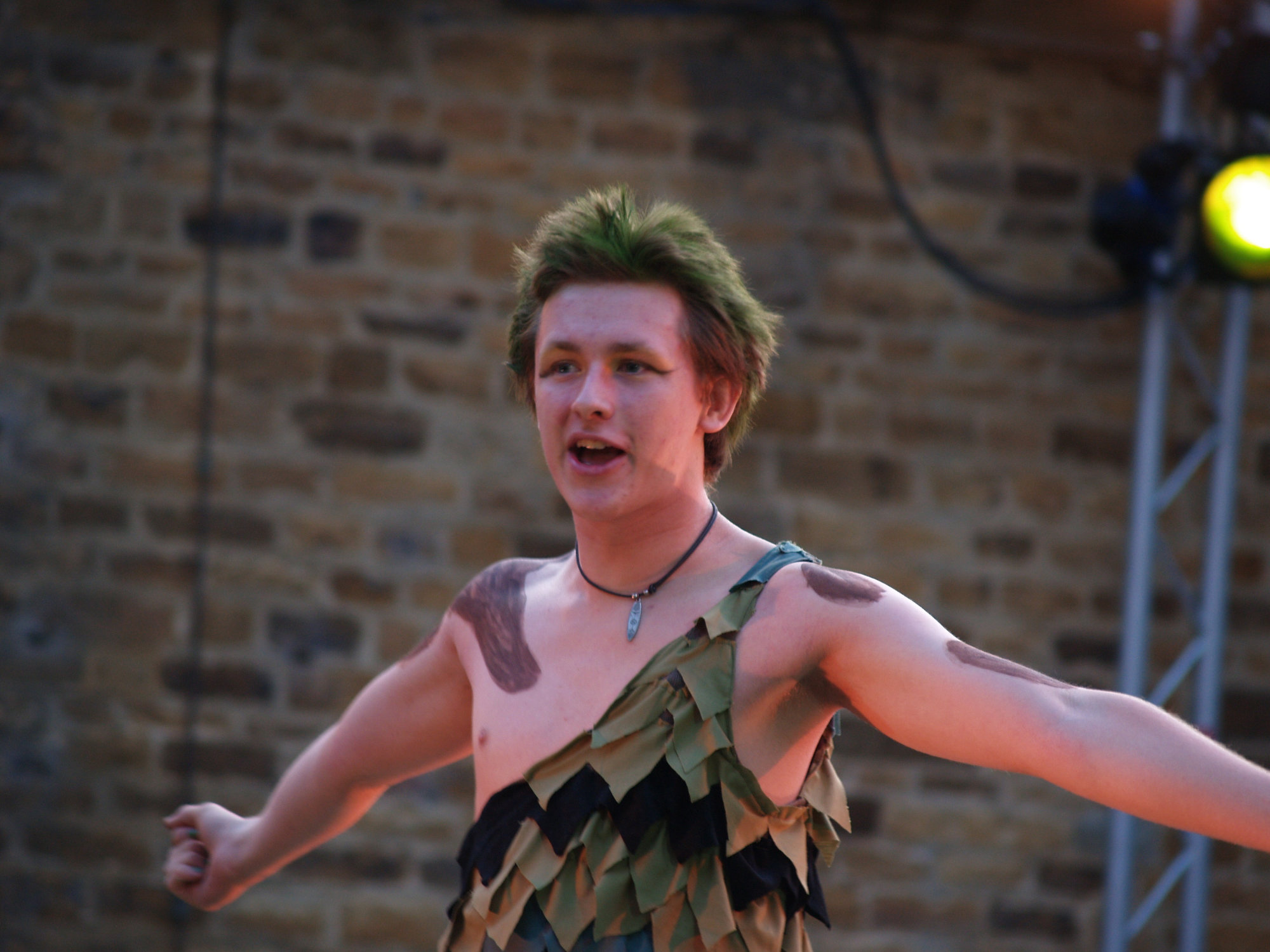


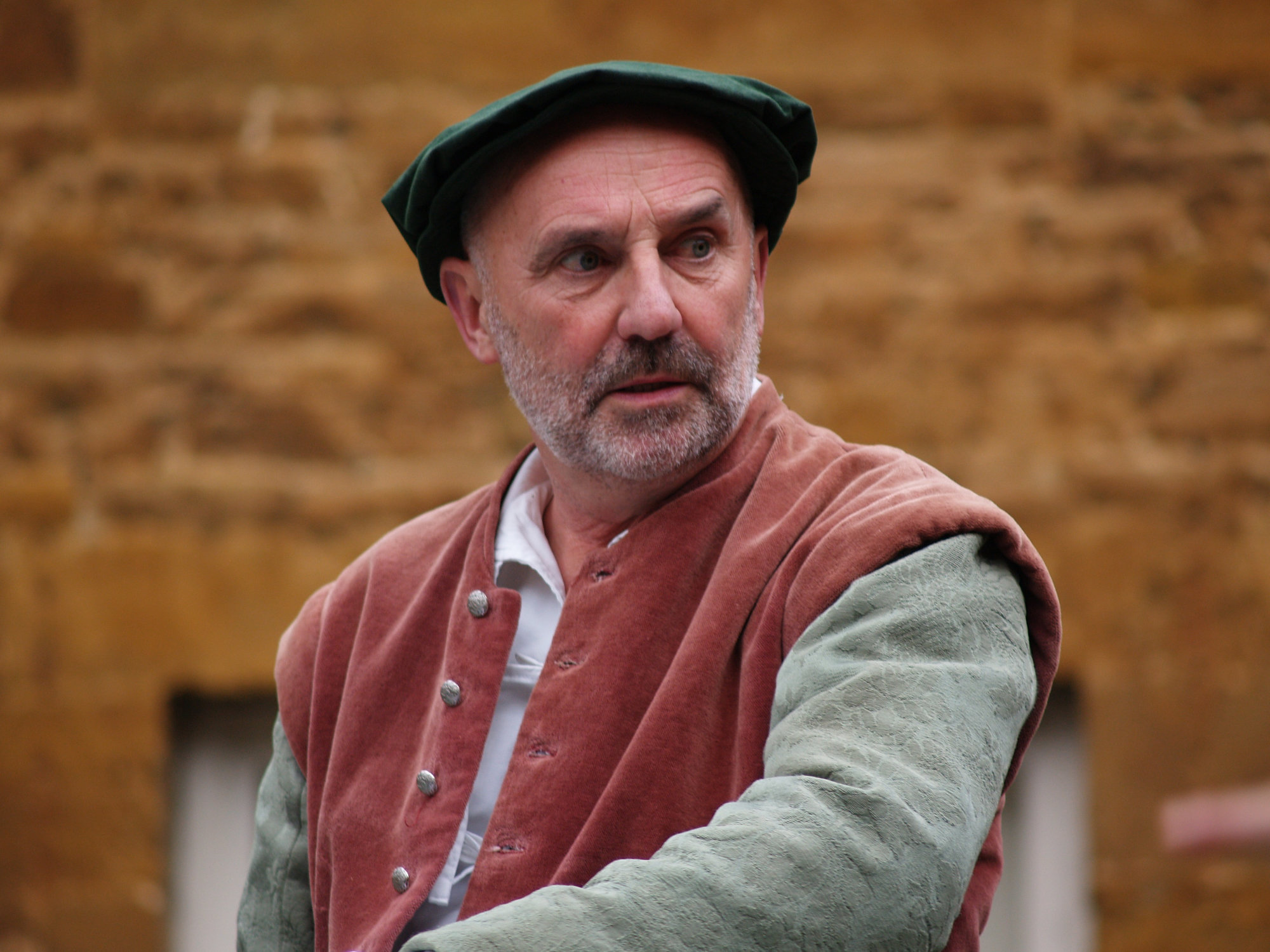
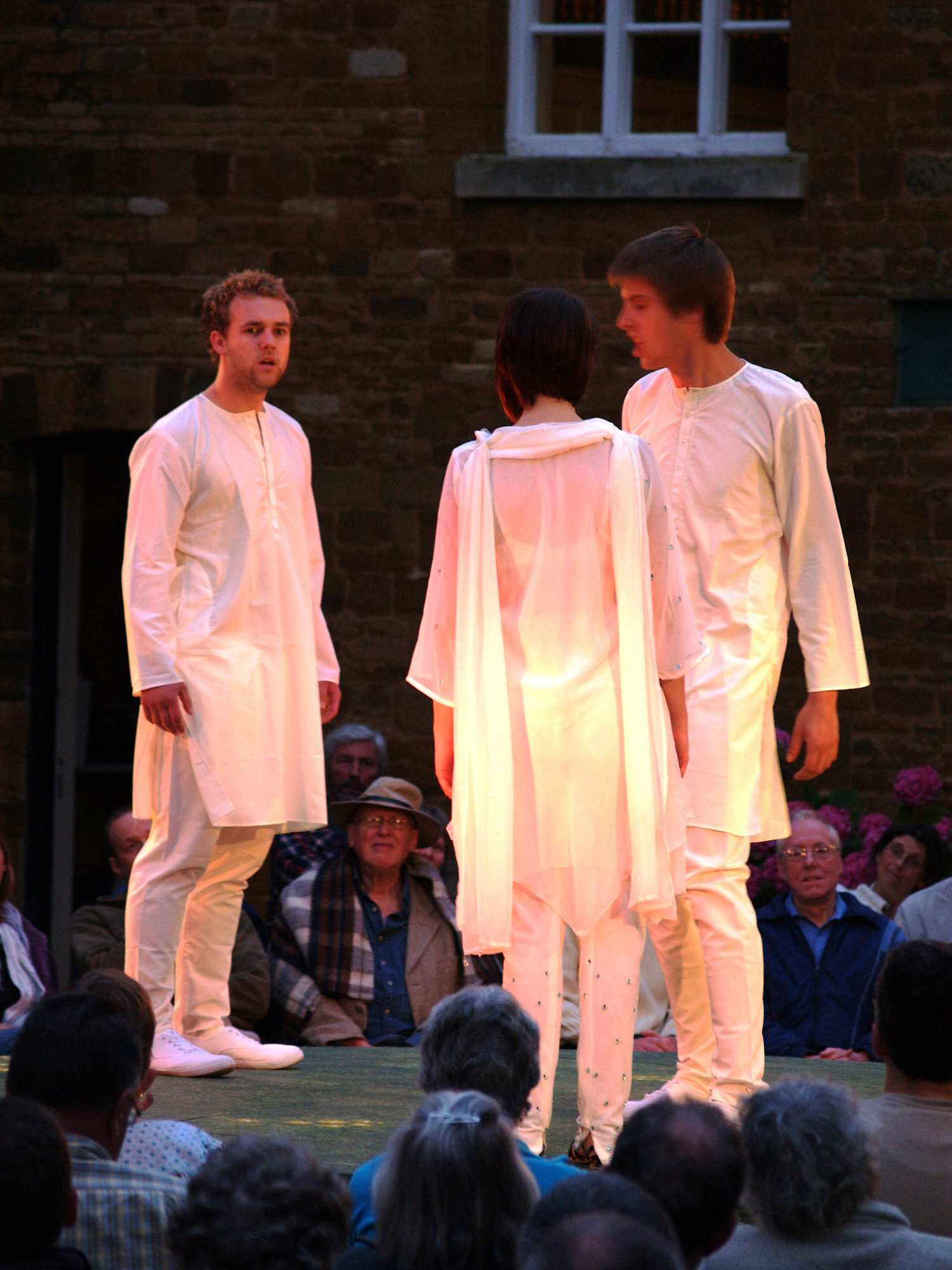

And are there fairies at the bottom of your garden? Well, this production of the Dream suggested that there are, though they were peculiarly human, being all shapes and different-sized boots, into Bollywood-style dancing and even scandalously making up to the audience!
Nevertheless the King and Queen of the Fairies, Oberon and Titania, had a fine battle of words over the ‘Indian Boy’ and Oberon’s spiteful persuasion of his wife through Puck’s mischievous translation of Bottom was well represented. Indeed Bottom was at his best in these woodland scenes, in and out of his ‘rare vision’. So enticing was this mischief to the fairies, however, that we missed much of the more benevolent side of Oberon’s character, in his care for Helena, for instance, and in his blessing of the bride-beds at the end of the play.
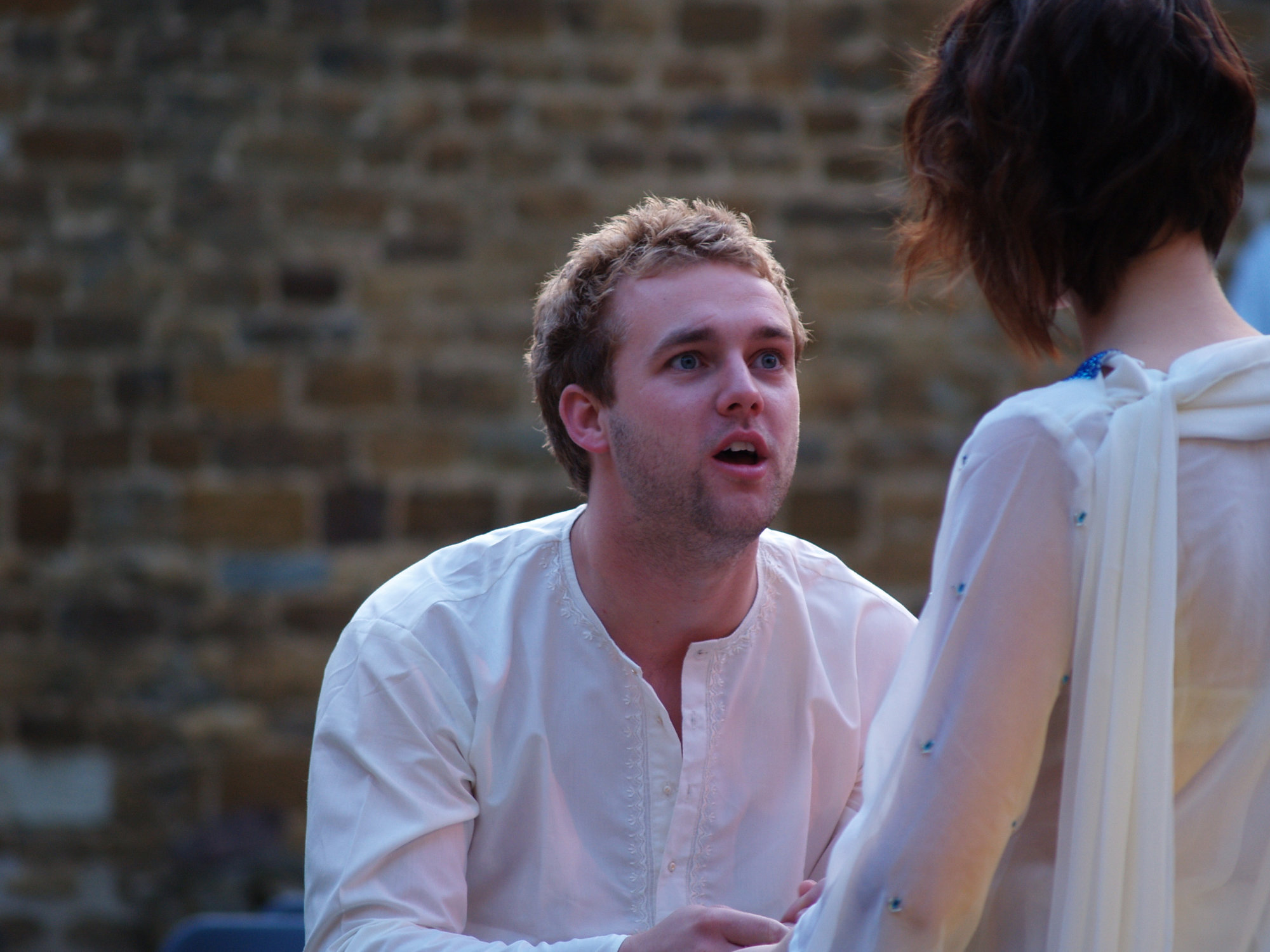
Within this exuberant fairy frame the Court of Theseus appeared solemn and restrained. The laws of Athens regarding patriarchal authority and children’s disobedience certainly felt more cruel than just. Once into the wild wood at night, however, and assisted by Puck and Oberon, the manners of the young people changed.
The great central scenes - Demetrius’s rejection of Helena, she was dragged clinging around the stage, followed by the misplaced love-juice that set Demetrius against Lysander and the explosion of misunderstanding between Hermia and Helena - were handled well and built up to a great set piece. One was led to believe that there was no way back from this. But luckily there was, of course, and the whole thing ended happily with the multiple nuptials.
The ending celebration was blessed with the performance of ‘the very tragical mirth’ of Pyramus and Thisbe by the ‘hard-handed men’ of Athens. As Philostrate says to Theseus their intents have been ‘Extremely stretch’d and conn’d with cruel pain / to do you service.’ Theseus, to his credit, acknowledges the ‘Love….and tongue tied simplicity’ that speaks to him in spite of their incompetence. While this performance of the mechanicals was certainly full of mirth not even the subtly controlling hand of Peter Quince could altogether give it the frame of serious intent that these remarks convey.
Overall this was a well-managed and entertaining Dream. The flowery round stage suggested the festive pastoral setting - it revolved dreamily; the actors had been directed well in its use; the light warmed the darkening scene and brightly illuminated the fairy finale; the music of recorder and pipe helped give atmosphere and support to the action. And the weather…!
We are well into rehearsal with the 'Dream Team' for A Midsummer Night’s Dream and, so far, no one has said with feeling 'What fools these mortals be' (actually David Chappell, as Theseus, could have said it as he chipped a bone in his elbow during a rather robust warm up session at our first rehearsal).
The popularity of the play with actors (and audiences alike) was proved from the outset with an excellent turn-out for the audition enabling me to put together a cast of 28 with a mixture of newcomers, returners to Masque and tried and tested stalwarts!
The Dream is possibly one of the most performed of Shakespeare's plays. Much of its appeal comes from the scenes of the 'mechanicals’ - the rustic figures of Bully Bottom (played by Richard Walker) and Peter Quince (Barry Dougall) and their fellows. Their antics create unintentional confusion; well they have me bemused anyway, especially in their 'preferred' play for the nuptials at the Athenian court.
Equally important is, of course, the 'dream' itself, which is brought about by trouble in fairy-land. Oberon, the King of the Fairies (played by professional actor Scott Bradley (some may remember Scott as Mercutio in my production of Romeo & Juliet), and his Queen, Titania (newcomer Katy Gibson), argue over the possession of the Indian boy. After a series of mishaps with the spells, helped along by Puck ( Tom Jordan), and arguments from the 'lovers': Hermia (Alex Rex), Helena (Becky Allan) and newcomer Max Lawrence as Lysander, and Demetrius , all is finally happily resolved.
The stage management team is led by Clare Brittain with Pam Mann in charge of costume, which ranges from the Jacobean to punk (but don't tell the fairies that), and is set on a revolving round platform (with thanks to Derek Banyard).
Its heady mixture of spells, comedy and romance makes A Midsummer Night’s Dream a perennial favourite. The play lends itself to outdoor performance, especially in the Tudor courtyard of Abington Park Museum - what larks!
This production is directed by Rob Kendall. He has also directed: Trainspotting (2008), Mother Courage And Her Children (2007), Twelfth Night (2005), Bent (2004), Hell Cab (2004), Murder in the Cathedral (2002), A View From The Bridge (2002), Entertaining Mr Sloane (2000), East (1998), A Streetcar Named Desire (1997) and Antony and Cleopatra (1996)