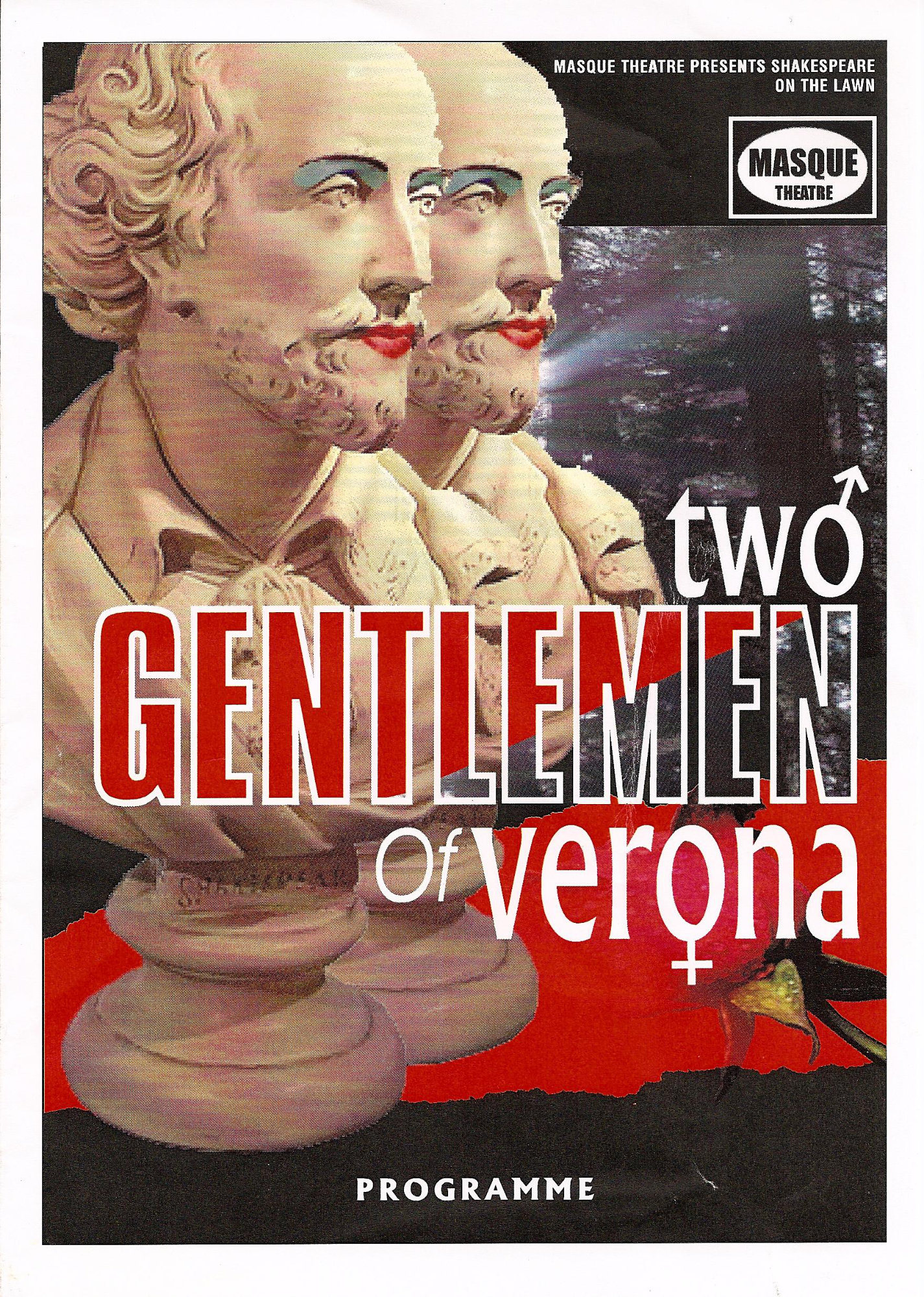
TWO GENTLEMEN OF VERONA
by William Shakespeare
by William Shakespeare
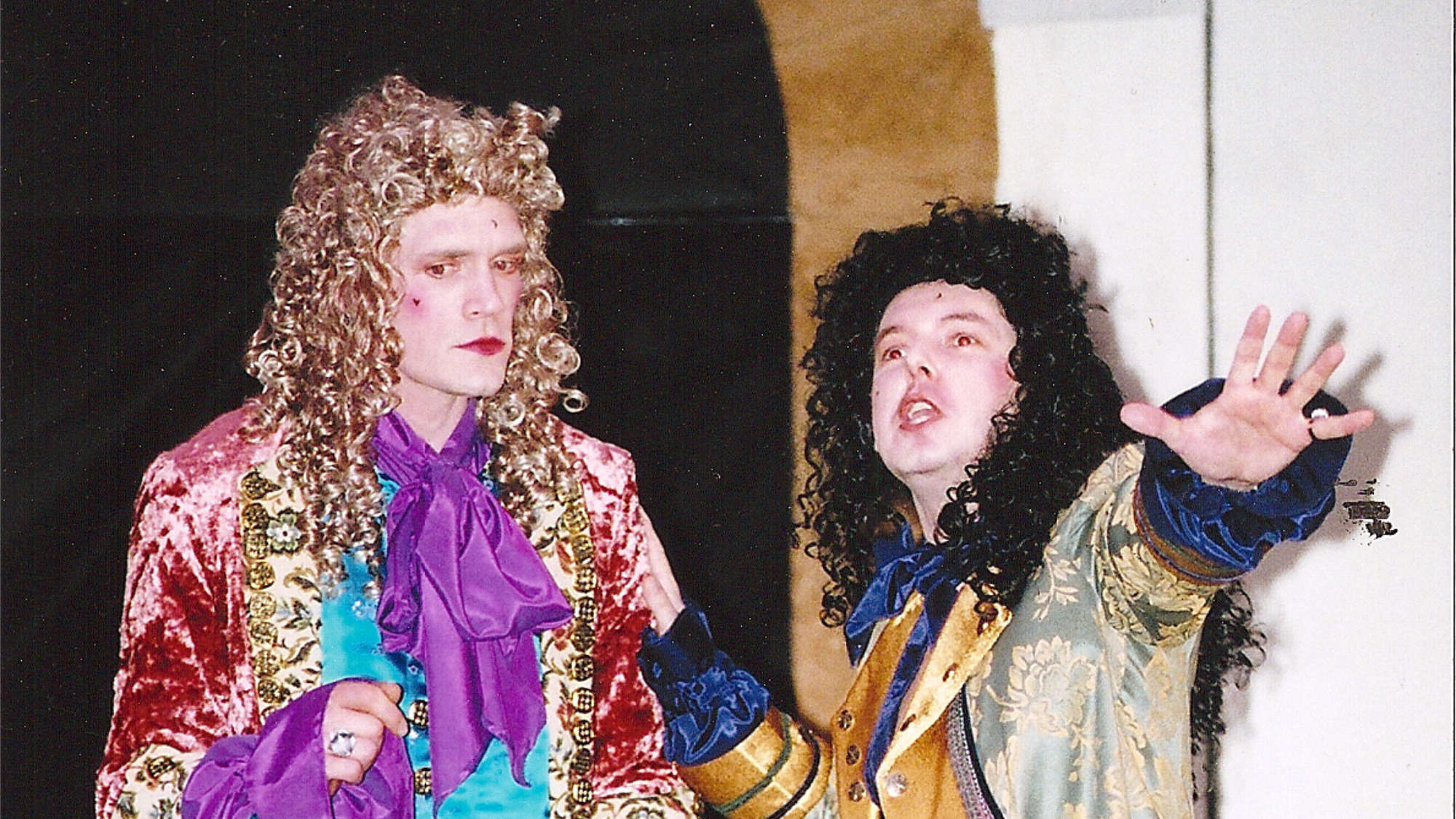
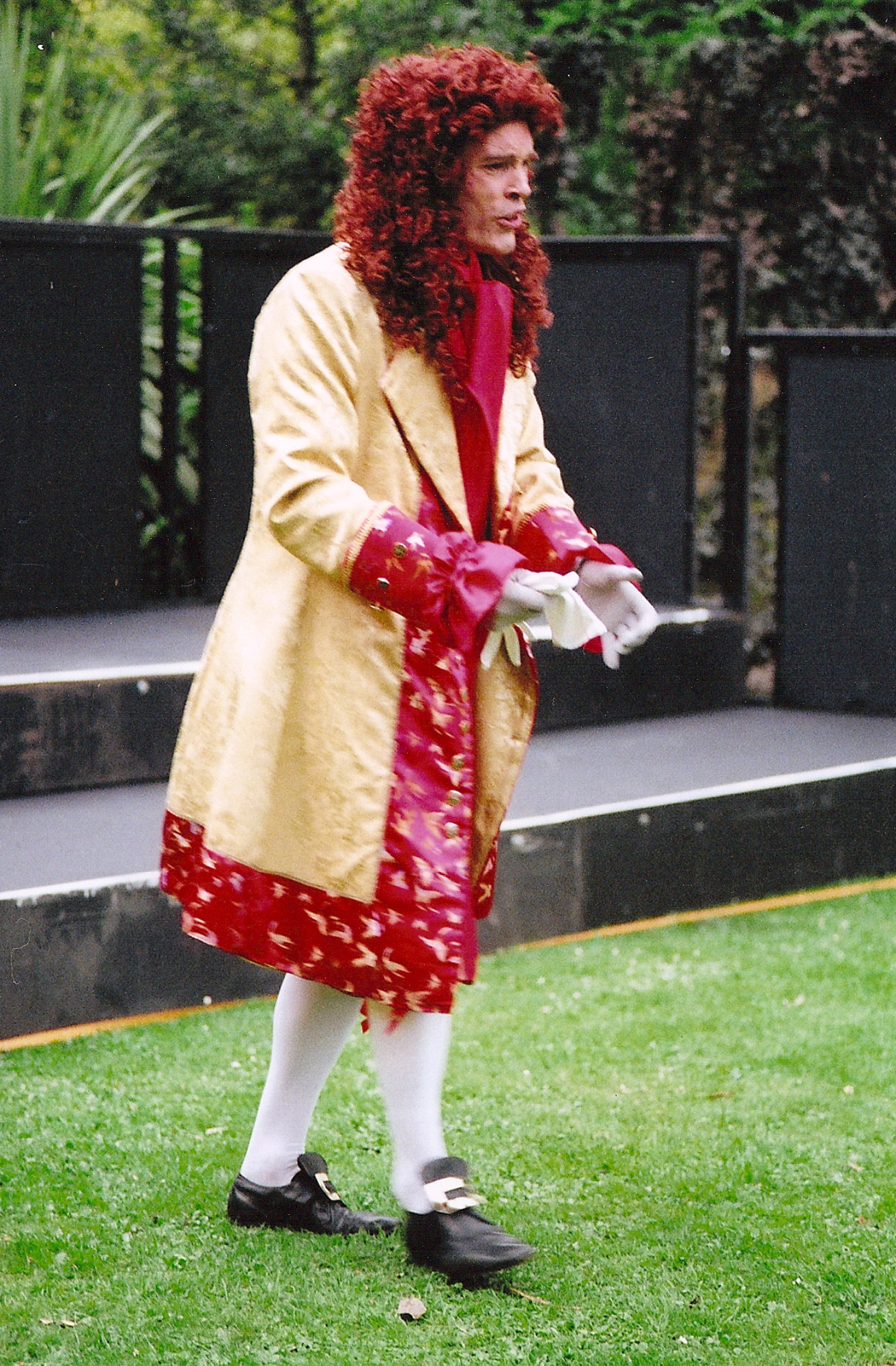
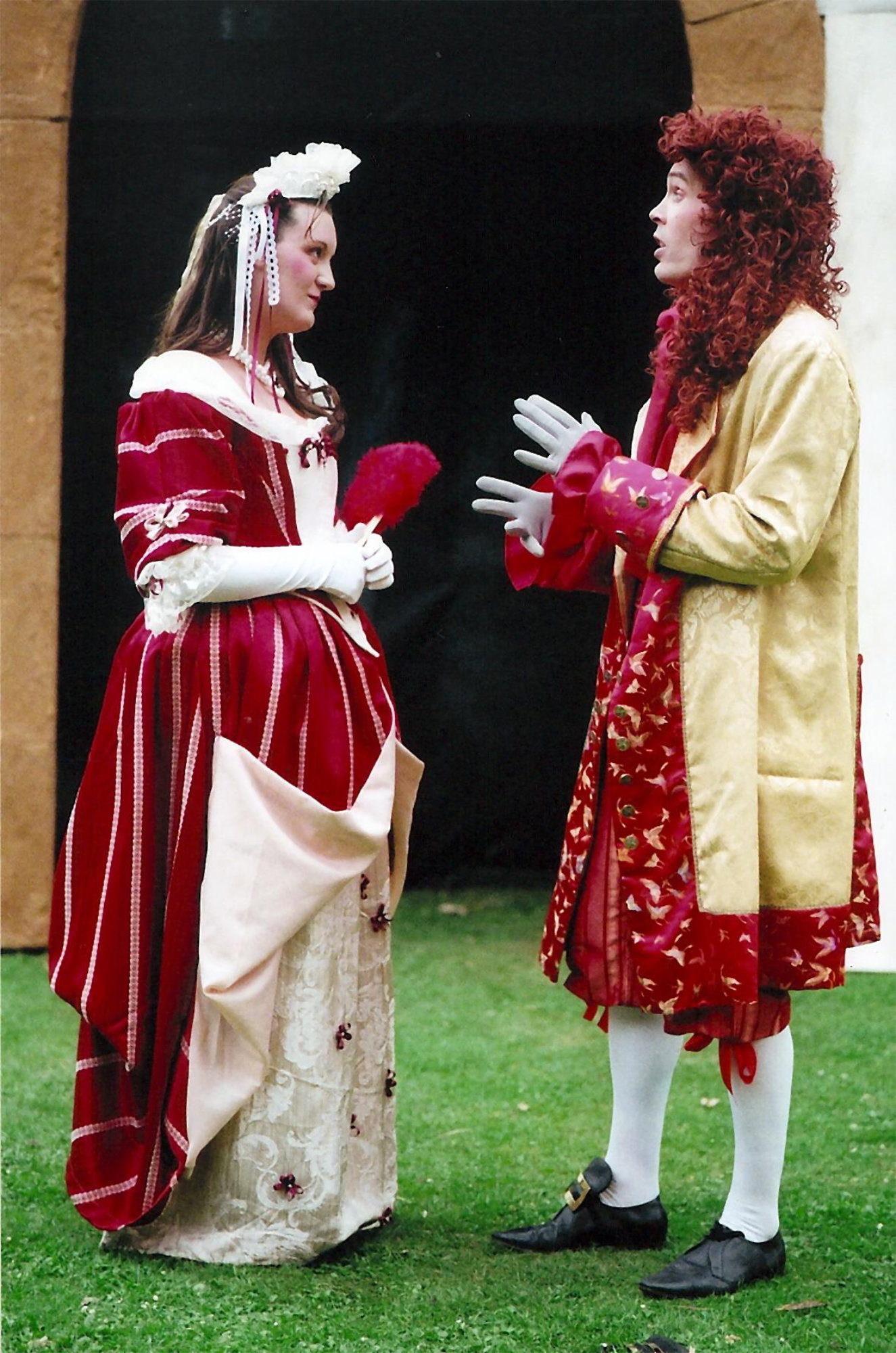
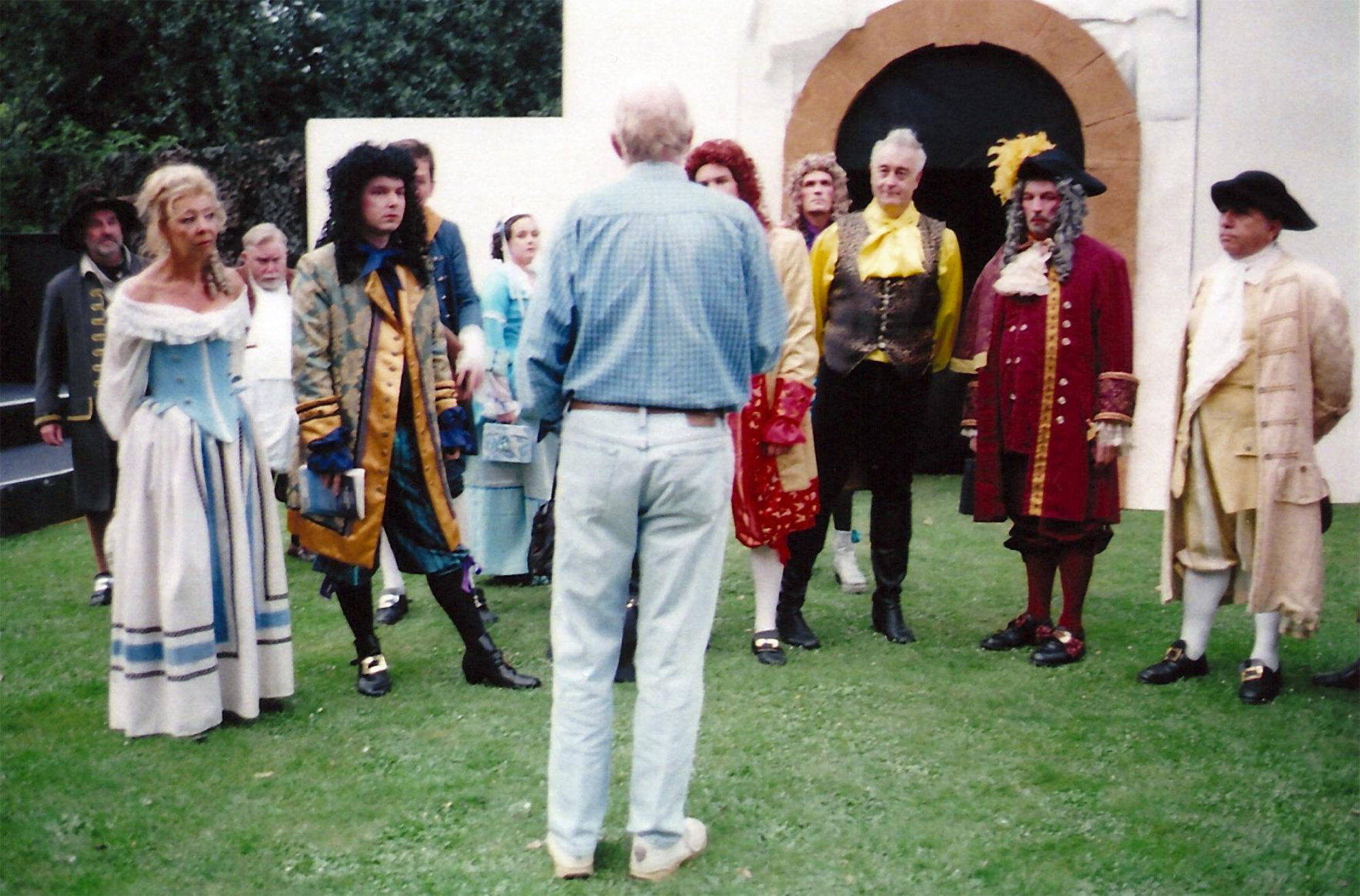
Chris Eves and Matthew Fell. Photo by John Hendy
Thu 28 July - Sat 6 August 2005 at 7.30pm (except Sun)
In the open-air in the grounds of St Andrew's Hospital, Billing Road, Northampton
CAST & CREW
Sir Proteus Matthew Fell
Sir Valentine Martin Williams
Speed David Chappell
Julia Jacquie Pryce
Lucetta Jan Stoppani
Antonio Charles Bond
Pantino Kevin Pinks
Lance Barry Dougall
Crab Played by herself
Duke of Milan Rob Kendall
Silvia Gemma Knight
Ursula Suzanne Richards
Attendant on the Duke Stuart Harris
Sir Turio Chris Eves
Sir Eglamour Barry Hillman
Host of an Inn Owen Warr
Outlaws in the forest Stuart Harris, Charles Bond, Kevin Pinks, Owen Warr
Musicians Scott Blundell, Andreas Christodoulou, Lisa Neophitou, Jenny Wood
Director Bob Godfrey
Stage Manager Clare Brittain
Assistant Stage Manager Mark Mortimer
Set Design Chris Eves assisted by Karen Lewis, Mark Mortimer, Kevin Smith, Lou Starkey with help by Derek Banyard
Costume Design and Wardrobe Mistress Tamsyn Payne
Costumes made by Tamsyn Payne, Peter Darnell, Dorothy Grainger, Pam Mann, Pamela Manning, Suzanne Richards, Amy Stewart with help from Julia Mallard, Rebecca Payne, Frances Warr, Alex
Make-up Design and Co-ordination Emma Carpendale assisted by Lauren Hubbard, Maz Curley, Georgia Coleman, Maggy Rose
Lighting Design, fit-up and operation The Works
Prompter Pat Brittain
Production Manager Christian Hawker
Poster Design Alan Lenton
Publicity and Programme Rob Kendall
Box Office Pat Toppin
Front of House Manager Ursula Wright with support from Masque Theatre members, Masque Youth Theatre members and their parents
Photography John Hendy
Photo gallery


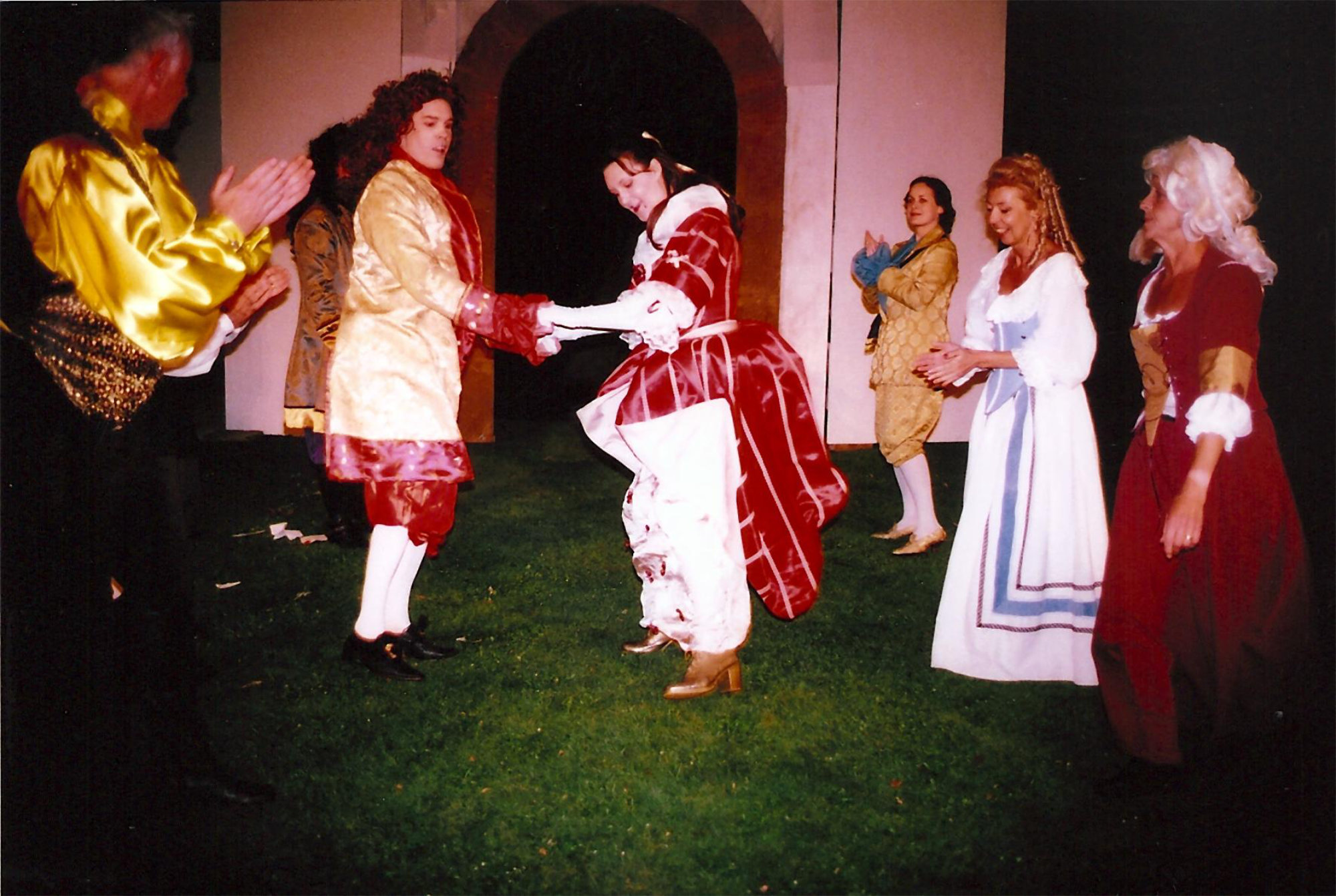
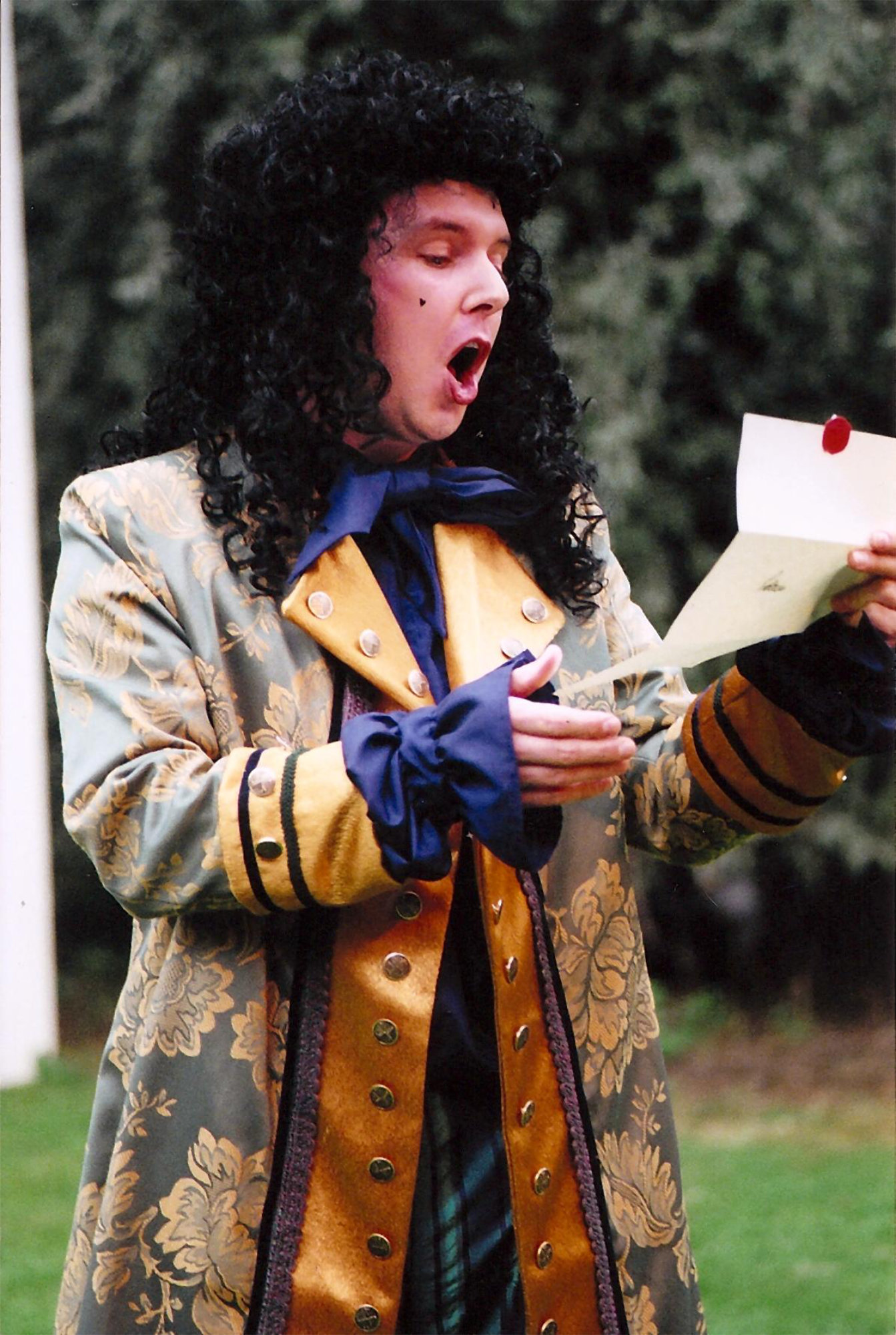
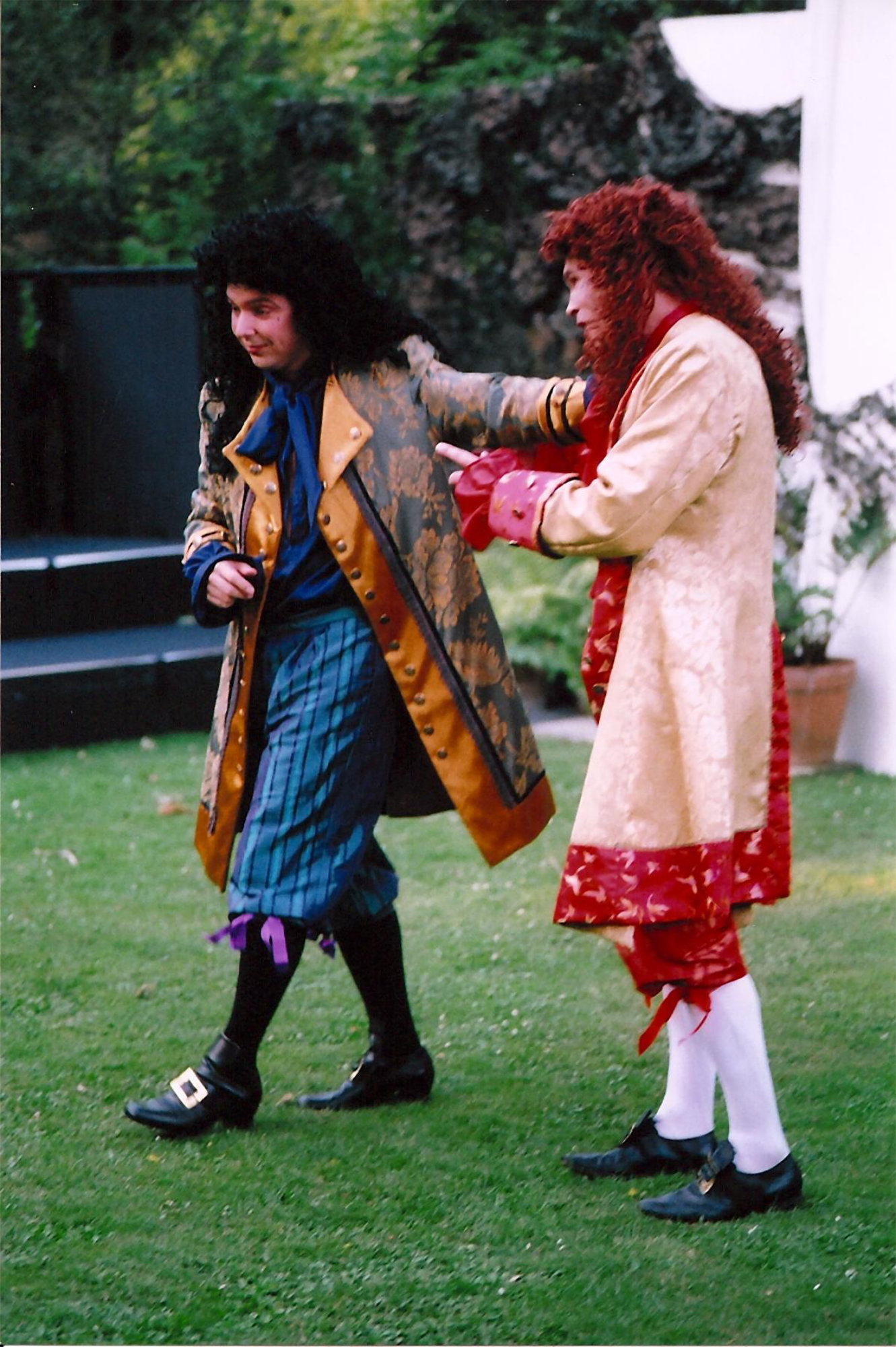
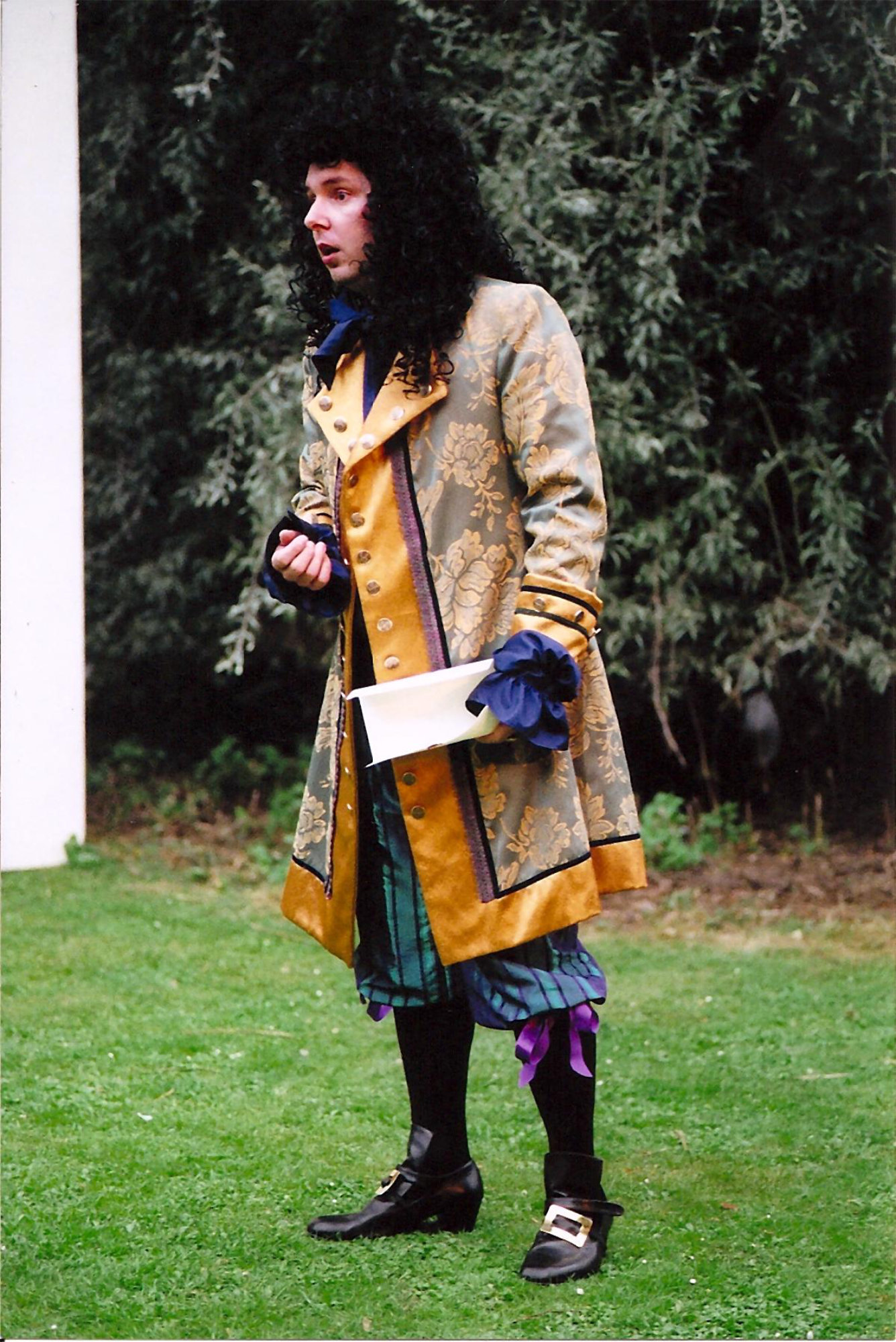


The play begins with Valentine making fun of his friend Proteus for being in love.
In a tradition of personification, Love shoots blind and his targets are unpredictable.
Shakespeare treats ideal Love in this play as a foolish and unreal state full of posturing and falsity.
Valentine himself succumbs to this ‘folly’ when he falls in love with Silvia.
The complications occur when Proteus is struck a second time by what he thinks is Love and also falls for Silvia.
In this state, he betrays both his first beloved, Julia, and his dear friend Valentine.
His double ‘folly’, therefore, upsets the order of relationships and provides the complications which have to be sorted out.
What anchors this debate about the virtue and vice of foolish love is Shakespeare’s representation of the young women, Julia and Silvia.
Silvia rejects Proteus and urges him to return to his first love.
Her loyalty to Valentine and Julia’s loyalty to Proteus are set against the unreality of both men’s extreme ardour.
But comedy is all about the ways in which errors in society can come to be tolerated and even forgiven.
Julia embodies this comic value and earns the right to judge Proteus lovingly at the end.
That Shakespeare is keen to show how the blind pursuit of the idea of Love is disastrously disruptive may also be seen in the behaviour of the clown-servants, Lance and Speed and of the fool-knights, Sir Eglaniour and Sir Turio.
Their farcical contributions and joking commentary make the point quite clear.
It comes down to how to be true to yourself and others when beset by a turmoil of conflicting emotions.
Does the answer to this question live in the distracting presence of the dog Crab, who cannot act and, thus, must be always and unavoidably truly herself?
Masque Theatre's production is directed by Bob Godfrey